£100 a month into an index fund: what it became after 5 and 10 years (real UK data)
Not a forecast: we ran Vanguard's own published fund prices month by month. £100 on the 1st of every month for 10 years (November 2016 to October 2026, £12,000 paid in) became £25,580 in Vanguard's S&P 500 ETF (VUSA) and £22,601 in its FTSE All-World ETF (VWRL). The same money at the average instant-access savings rate became £12,984.
Capital at risk: investments can fall as well as rise, and past performance is not a reliable indicator of future results. This is not a recommendation of any fund.
Watch the full breakdown
7 min 24 s, from our UniMind Pro Markets channel. Watch on YouTube. Narration is AI-generated.
10 years of £100 a month
| Where the £100 went (Nov 2016 to Oct 2026) | Paid in | Value on 31 Oct 2026 |
|---|---|---|
| VUSA (S&P 500), dividends reinvested | £12,000 | £25,580 |
| VWRL (FTSE All-World), dividends reinvested | £12,000 | £22,601 |
| Cash at the Bank of England average instant-access rate | £12,000 | £12,984 |
The average rate is just that: savers who moved to best-buy accounts earned more than this. Cash also never fell. VUSA went through four falls of more than 10% at month-ends in pounds: 11.8% (September to December 2018), 14.6% (January to March 2020), 11.3% (December 2021 to June 2022) and 14.0% (January to April 2025).
A £5,000 head start
| VUSA, £100 a month | Start £0 | Start £5,000 |
|---|---|---|
| 10 years: paid in | £12,000 | £17,000 |
| 10 years: value | £25,580 | £44,162 |
| 5 years (Nov 2021 to Oct 2026): paid in | £6,000 | £11,000 |
| 5 years: value | £8,742 | £17,661 |
Over 10 years the extra £5,000 ended £18,582 ahead, about 3.7 times its size, because it was invested for the whole period. Starting from £0 still more than doubled the money paid in. The 5-year run is a reminder that timing matters: a pot started in November 2021 was below the money paid in at several month-ends in 2022 and early 2023, lowest in June 2022 at £844, about 6% below the £900 paid in (counting the July payment, which was bought at the June price).
Dividends: reinvested or taken as cash
Taking VUSA's dividends as cash (and leaving that cash at 0%) gave £24,822 after 10 years, including £1,112 of dividends, against £25,580 reinvested: about £758 less. In the UK, "dividend reinvestment" usually means choosing an accumulating fund (income stays inside the fund) or a platform that reinvests for you. The accumulating versions of these ETFs, VUAG and VWRP, launched in 2019, so we only show them from launch: £100 a month into VUAG from June 2019 became £15,595 from £8,900, and into VWRP from August 2019, £14,091 from £8,700.
Fees
Fund charges are already inside these results (ongoing charges, OCF, of 0.07% a year for VUSA and VUAG, 0.14% for VWRL and VWRP). Platform fees are not. As an example, a 0.15% a year platform fee would have turned the 10-year VUSA pot of £25,580 into £25,347. Try your own numbers in the fund fee calculator.
For you in the UK
- Stocks and Shares ISA: GOV.UK says you do not pay tax on income or capital gains from investments in an ISA. The 2026/27 ISA allowance is £20,000. Our results assume an ISA, so no tax was taken off.
- Outside an ISA: only the first £500 of dividends a year is tax-free, and gains above the £3,000 annual exempt amount can be taxed (GOV.UK, read 5 November 2026).
- Emergency cash first: money you may need within a few years has to sit through falls like the ones above if it is invested.
How we calculated
£100 goes in on the 1st of each month (plus £5,000 on the first day in the head-start case), bought at the previous month-end price (the fund's net asset value, NAV, income reinvested), converted to pounds at the Bank of England month-end exchange rate. These funds value their holdings in US dollars (the NAV), so the pound/dollar rate also moved the results, even though you buy them in pounds. Dividends taken as cash use Vanguard's distribution history, converted at the Bank of England daily rate on each payment date. Cash uses the Bank of England's average instant-access rate (series IUMB6VJ; October 2026 was not yet published, so September's 2.06% was used). Values are at 31 October 2026. Month-end data hides falls inside a month.
Frequently asked questions
What did £100 a month in an S&P 500 fund become over 10 years?
In our calculation with Vanguard's published prices for VUSA, £100 on the 1st of every month from November 2016 to October 2026 (£12,000 paid in, dividends reinvested, inside an ISA) was worth £25,580 on 31 October 2026. The same money in Vanguard's FTSE All-World ETF (VWRL) was worth £22,601. Past performance is not a reliable indicator of future results.
How much difference did a £5,000 head start make?
Starting with £5,000 and then adding £100 a month into VUSA turned £17,000 paid in into £44,162 over the same 10 years, £18,582 more than starting from £0. The extra £5,000 grew to about 3.7 times its size because it was invested for the full 10 years.
Was the money ever worth less than what was paid in?
Over 10 years from November 2016 the VUSA pot never ended a month below the money paid in, in our month-end data. Over the 5 years from November 2021 it did: it was below the money paid in at several month-ends in 2022 and early 2023, lowest in June 2022 at £844, about 6% below the £900 paid in (counting the July payment, which was bought at the June price). Month-end data hides falls inside a month.
Why not show VUAG or VWRP over 10 years?
The accumulating versions launched in 2019 (VUAG on 14 May 2019, VWRP on 23 July 2019), so they have no 10-year record of their own. We show them only from launch and do not borrow figures from the distributing funds or the index.
Sources
- Vanguard UK — S&P 500 UCITS ETF (VUSA): price and performance, and the equivalent pages for VWRL, VUAG and VWRP — data to 31 October 2026, read 5 November 2026
- Vanguard UK Professional — VUSA distribution history and the VWRL equivalent — read 5 November 2026
- Bank of England database — IUMB6VJ (instant-access rate), XUMLUSS and XUDLUSS (US dollar into sterling, month-end and daily) — read 5 November 2026
- GOV.UK — How ISAs work, Tax on dividends, Capital Gains Tax allowances — read 5 November 2026
All results are our own month-by-month calculation from the published data above. Prepared and reviewed by the Calcistry editorial team · Reviewed · Editorial policy
General information, not financial advice. No fund is recommended. Capital at risk: past performance is not a reliable indicator of future results.
Run your own numbers
See what a monthly amount could grow to at a rate you choose, and how much tax-free room an ISA gives you.
Open the compound interest calculator →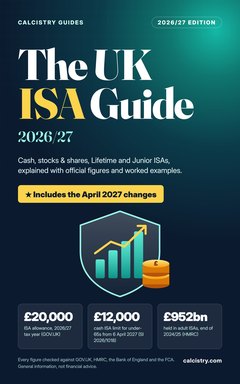
Our guide · PDF + EPUB
The UK ISA Guide 2026/27
Every type of ISA explained with official 2026/27 figures, transfers and worked plans at ages 25, 35, 55 and 67.
Written and sold by us through Gumroad. It never changes what our calculators show. General information, not financial advice.
Free email · one or two a month
Rules change. We'll tell you when.
One short email when UK tax, ISA or pay rules change, with the calculator already updated. Occasionally we mention our own paid guides, always labelled. Free, unsubscribe any time.
Sign-up happens on Substack, which may also suggest other newsletters or its app. Privacy policy